
Getting started in the private field can seem overwhelming at first, especially if you’re not sure what qualifications are required. For many aspiring professionals, Security Guard D Training is the first critical step in becoming job-ready. It’s designed to equip individuals with the foundational knowledge and hands-on skills needed for entry-level roles in unarmed security across various sectors.
From what the course covers to what it can lead to, here’s a practical look at what this certification involves and why it’s worth considering.
Understanding the Role of Unarmed Security Personnel
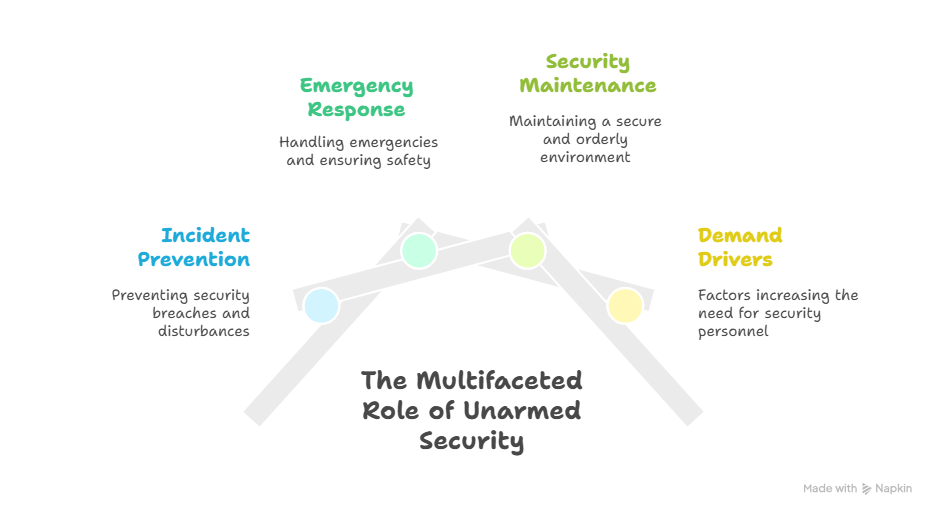
Before diving into certification details, it’s important to understand the role itself. Unarmed guards are often the first line of defense in public and private spaces. They’re not just there to observe—they prevent incidents, respond to disturbances, and manage emergencies when needed.
Whether stationed at a shopping mall, hospital, corporate office, or event venue, these professionals help maintain a secure and orderly environment. In cities with growing infrastructure like Amman and other hubs across Jordan, demand for qualified personnel is rising steadily.
That demand is not only driven by business growth but also by increased awareness around it standards in both public and private sectors.
What’s Covered in the Curriculum
Most certification programs are structured to balance theory and practice. While the course specifics may vary by provider, there are several core areas consistently covered:
Legal Responsibilities
You’ll gain an understanding of the limits and expectations of your authority. This includes citizen’s arrest laws, property rights, and the do’s and don’ts when interacting with the public.
Emergency Situations
Knowing how to act when seconds count is vital. You’ll learn how to respond to medical emergencies, fire alarms, evacuations, and unexpected threats, from suspicious packages to aggressive behavior.
Access Control and Patrol
From managing building entry points to executing systematic patrols, this part of the curriculum teaches you how to remain alert, identify irregularities, and deter potential risks through visibility and presence.
Report Writing
Good documentation is a major part of the job. Whether it’s a daily activity log or an incident report, you’ll be trained to write with clarity, objectivity, and accuracy.
Customer Service and Professional Conduct
Security is more than standing watch—it’s also about communication. Many posts involve engaging with the public, assisting visitors, or working alongside employees, making respectful and professional interaction essential.
The Real-World Skills You’ll Use Every Day
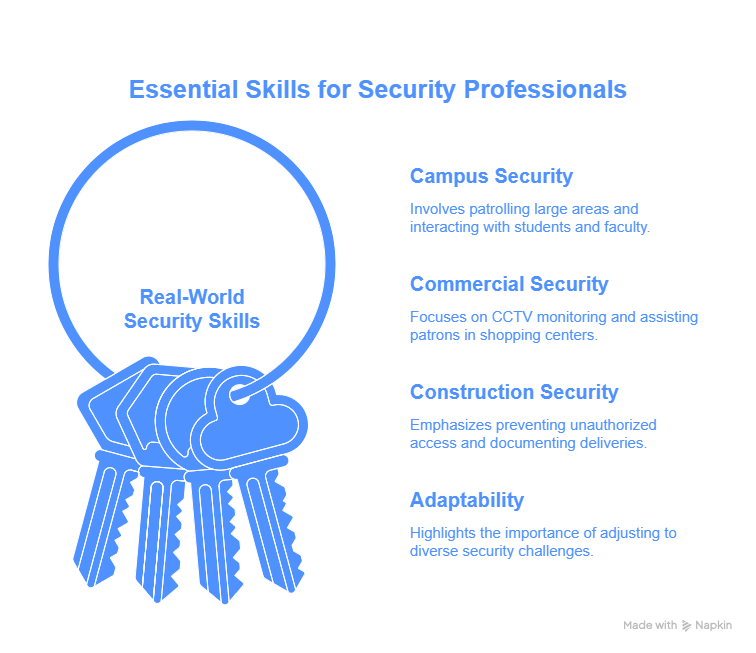
One of the most valuable aspects of this license is how practical it is. You’re not just studying to pass an exam—you’re learning tools you’ll apply daily. For example:
- If you’re assigned to a university campus, you’ll likely be walking large areas and working closely with students, faculty, and possibly law enforcement.
- In a commercial setting like a shopping center, you may have to monitor CCTV systems, assist lost patrons, or coordinate with cleaning and maintenance teams during emergencies.
- At construction sites, your focus might shift to preventing unauthorized access and documenting delivery activity.
Each site presents a different challenge, which is why adaptability becomes one of your most important traits.
Who Should Consider This Certification?
This pathway appeals to a wide range of people. Some are looking for a stable, structured job with opportunities to grow. Others view it as a stepping stone to more specialized roles, like close protection or surveillance operations.
There’s also a growing interest among younger adults, especially those who prefer gaining practical, hands-on skills over long academic routes. It’s a way to enter the workforce quickly while still contributing meaningfully to public safety.
In regions like Jordan, where security is becoming a cornerstone of both government and private-sector planning, having a certified credential increases your employability and gives hiring companies peace of mind.
Beyond the Basics: Where It Can Take You
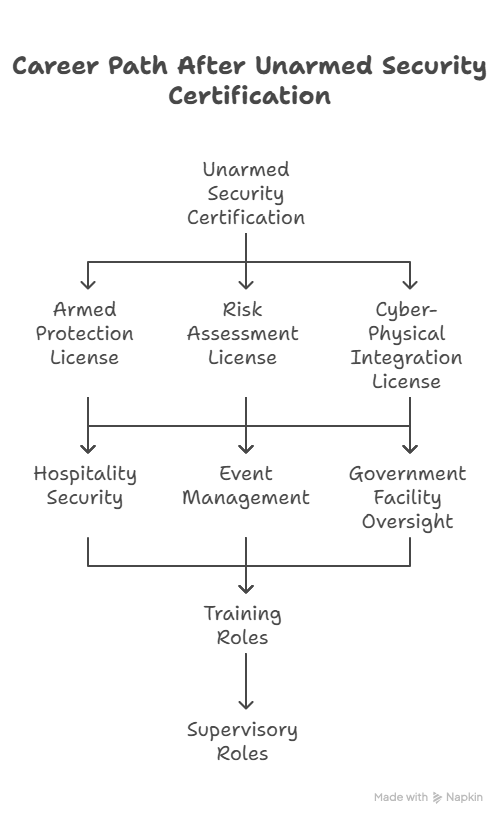
While this certification prepares you for unarmed positions, it also lays the groundwork for future advancement. Many professionals eventually pursue licenses in armed protection, risk assessment, or cyber-physical integration roles.
You may also decide to specialize in specific sectors such as hospitality security, event management, or government facility oversight. With further education and experience, some even move into training or supervisory roles.
The beauty of this pathway is its flexibility. It can serve as a career foundation or evolve into a long-term profession, depending on your interests and commitment.
What to Expect After Certification
Once certified, you’ll need to register with the appropriate authorities and may also need to pass a background check, depending on your region’s legal standards. From there, job opportunities typically come through security firms or direct hiring by property managers, hospitals, or retail groups.
What you do with your first few roles sets the tone for your career. Be punctual. Show initiative. Get to know the systems you’re using, whether it’s a visitor management platform or emergency protocol board.
Many employers value reliability and attitude as much as technical knowledge. Security is a people-focused job, and building trust with both your team and the public goes a long way.